Top Ad 728x90

Showing posts with label Diseases. Show all posts

Saturday, 1 July 2017

Daily dose of cannabis extract could reverse brain's decline in old age, study suggests

by


Regular low doses of THC dramatically boosted memory and learning in older mice, say scientists, who plan a clinical trial in humans later this year

Researchers have come up with an unusual proposal to slow, or even reverse, the cognitive decline that comes with old age: small, daily doses of cannabis extract.
The idea emerged from tests on mice which found that regular, low doses of tetrahydrocannabinol (THC) – the main psychoactive ingredient in cannabis – impaired memory and learning in young animals, but boosted the performance of old ones.

The discovery has raised hopes for a treatment that improves brain function in old age without inducing the behavioural effects well known to recreational users of the drug. To investigate whether it works in humans, the scientists plan to launch a clinical trial later this year.
“If we can rejuvenate the brain so that everybody gets five to 10 more years without needing extra care then that is more than we could have imagined,” said Andras Bilkei-Gorzo at the University of Bonn.
Research on cannabis use by adolescents has found compelling evidence that regular, heavy use can impair the memory. But the impact of the drug on older people’s brains has been far less well studied.
Writing in the journal Nature Medicine, the scientists describe how they gave a month-long course of daily THC to mice aged two months, one year, and 18 months. The mice were then tested to see how fast they solved a water maze, and how quickly they recognised familiar objects such as mice they had met before.
Without the drug, the younger mice aced the tests, while the older ones struggled. But infusions of THC had a dramatic impact on both groups. The performance of the younger mice plummeted on THC, while older mice improved so much that their scores matched those of healthy drug-free young mice. The benefits lasted for weeks after the infusions ended. None of the mice displayed the strange effects one might expect from doses of THC.


The German team believes that the drug works by stimulating what is known as the endocannabinoid system, a biochemical pathway that becomes less active with age in mice, humans and other animals. “I’m sure that what we are seeing are the long-term consequences of normalising the system,” Bilkei-Gorzo said.“These results reveal a profound, long-lasting improvement of cognitive performance resulting from a low dose of THC treatment in mature and old animals,” the scientists write. The boost in brain function was linked to an apparent restoration of gene expression in the brain to more youthful levels.
David Nutt, the former government drugs adviser and professor of neuropsychopharmacology at Imperial College London, said he was not surprised at the potential for THC to improve memory in old age. “The key question now is does the same apply to humans? Clearly this needs to be tested, but it will not be possible in the UK due to the ridiculous restrictions on cannabis research occasioned by its being a schedule 1 drug.”
Michael Bloomfield, a clinical lecturer in psychiatry at University College London said: “What is particularly exciting about this research is that it opens up a whole new chemical system, the endocannabinoid system, as a potential target for new avenues of research, which could include illnesses like dementia.

“However, we are still in very early days and further research is needed,” he said. THC produces complicated and sometimes apparently opposite effects depending on the dose, the age of the person taking it, and how often the drug is administered, he warned. “This means that the possibility of doctors potentially prescribing cannabis, THC or similar compounds for memory problems in older people is still a long way off,” he added.
Source:
         https://www.theguardian.com/science/2017/may/08/daily-dose-of-cannabis-extract-could-reverse-brains-decline-in-old-age-study-suggests-thc

Study finds mushrooms are the safest recreational drug

by


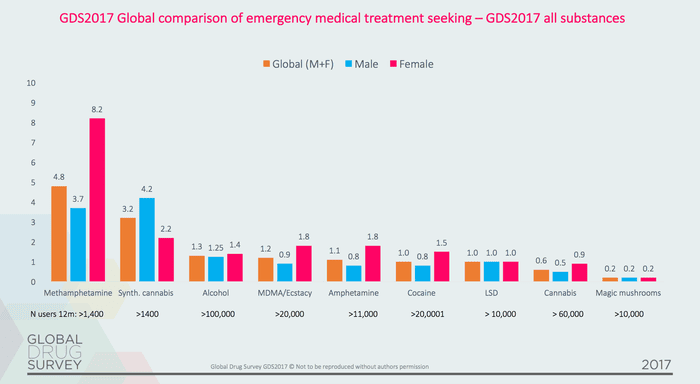
People taking mushrooms in 2016 needed medical treatment less than for MDMA, LSD and cocaine, while one of the riskiest drugs was synthetic cannabis

Mushrooms are the safest of all the drugs people take recreationally, according to this year’s Global Drug Survey.
Of the more than 12,000 people who reported taking psilocybin hallucinogenic mushrooms in 2016, just 0.2% of them said they needed emergency medical treatment – a rate at least five times lower than that for MDMA, LSD and cocaine.

“Death from toxicity is almost unheard of with poisoning with more dangerous fungi being a much greater risk in terms of serious harms.”
Global Drug Survey 2017, with almost 120,000 participants in 50 countries, is the world’s biggest annual drug survey, with questions that cover the types of substances people take, patterns of use and whether they experienced any negative effects.
Overall, 28,000 people said they had taken magic mushrooms at some point in their lives, with 81.7% seeking a “moderate psychedelic experience” and the “enhancement of environment and social interactions”.
Magic mushrooms aren’t completely harmless, notes Winstock. “Combined use with alcohol and use within risky or unfamiliar settings increase the risks of harm most commonly accidental injury, panic and short lived confusion, disorientation and fears of losing one’s mind.”
In some cases people can experience panic attacks and flashbacks, he added, so his advice for people thinking about taking them is to plan “your trip carefully with trusted company in a safe place and always know what mushrooms you are using”.
Even bad trips can have positive outcomes, according to a separate piece of research carried out by Roland Griffiths and Robert Jesse at Johns Hopkins Medicine.
In their 2016 paper they surveyed almost 2,000 individuals about their single most psychologically difficult or challenging experience with magic mushrooms. Of that group, 2.7% received medical help and 7.6% sought treatment for enduring psychological symptoms. Nevertheless 84% of those surveyed said they benefitted from the experience.
“In a way, it’s not really so surprising,” said Griffiths in a Q&A about the paper. “When we look back on challenging life events we wouldn’t choose, like a bout with a major disease, a harrowing experience while rock-climbing, or a painful divorce, sometimes we feel later that the difficult experience made us notably stronger or wiser. We might even come to value what happened.”
Outside of recreational use, magic mushrooms have been shown in clinical trials to treat severe depression and anxiety.
Of the almost 10,000 LSD consumers who took part in GDS 2017, around 1% of them – 95 individuals – reported seeking emergency medical treatment, five times more than those who took magic mushrooms.
“LSD is such a potent drug,” said Winstock. “It’s so difficult to dose accurately when tabs you buy vary so widely. It’s easy to take too much and have an experience beyond the one you were expecting.”
He added that drug manufacturers are starting to incorporate novel super potent psychedelics such as NBOMe into tabs, which adds to the risk. He suggests making efforts to get a “reliable, trustworthy supply” and “always take a tiny dose to start”, waiting a few hours before taking more.

One of the riskiest drugs, according to the survey, was synthetic cannabis. Over one in 30 of users in the sample sought emergency medical treatment – the highest of any drug studied except crystal methamphetamine. That rises to one in 10 among people who use the drug at least 50 times per year. These figures echo the data from the previous year’s report.
Synthetic cannabis, sold as “spice” and “black mamba”, is an umbrella term for hundreds of chemical compounds that mimic the effects of THC, the active ingredient of cannabis, in the brain. These synthetic forms are often extremely potent, cheap and odourless, which has led to them flooding the market in the US and Europe. They’ve been particularly popular in prisons in the UK, where they’ve had a “devastating impact”and have been linked to deaths, serious illness and episodes of self-harm among inmates.
Brad Burge from the Multidisciplinary Association for Psychedelic Studies (Maps) urged caution on relying on people’s self reports for data as people often take multiple drugs at the same time, so you can’t be sure which one is causing the problem.
He also highlighted that seeking emergency medical treatment means different things for different drugs. With a drug such as heroin, a trip to the emergency room is a life-or-death situation requiring resuscitation and medication. With LSD or mushrooms, there is no toxicity and the effects wear after a few hours.
“There is no known lethal dose for LSD or pure psilocybin,” he said.
Both Winstock and Burge said that the findings indicate a need for drug policy reform, with a focus on shifting psychedelics off the schedule one list of the most dangerous controlled substances.
“Drug laws need to balance the positives and problems they can create in society and well crafted laws should nudge people to find the right balance for themselves,” said Winstock.
“People don’t tend to abuse psychedelics, they don’t get dependent, they don’t rot every organ from head to toe, and many would cite their impact upon their life as profound and positive. But you need to know how to use them.”

Source:
            https://www.theguardian.com/society/2017/may/23/study-hallucinogenic-mushrooms-safest-recreational-drug-lsd#img-2

Mysterious Marijuana-Related Illness Popping Up In Emergency Rooms

by

The vomiting illness is increasing in states with legal pot.


Doctors are stumped by the science behind cannabinoid hyperemesis syndrome. 

A mysterious marijuana-related illness is popping up with increasing frequency in hospital emergency rooms, particularly in states where cannabis is now legal.


The symptoms are severe abdominal pain and violent vomiting — and most doctors are initially stumped when they encounter patients with the problem.
The illness is cannabinoid hyperemesis syndrome, which is linked to heavy, long-term use of marijuana, according to experts. For some reason, the nausea and vomiting of CHS can be relieved with hot showers or baths, which can serve as an important hint for physicians trying to diagnose a patient.
The condition is especially puzzling considering cannabis’ accepted reputation as an anti-nausea agent; two cannabinoid-based medications are FDA-approved for alleviating nausea in people undergoing chemotherapy for cancer, while nausea is a common reason for doctors to prescribe cannabis in states that have legalized medical marijuana. 
Since 2009, when the federal government relaxed its stance on medical marijuana, emergency room diagnoses for CHS in two of Colorado’s hospitals nearly doubled, according to a study co-authored by Dr. Kennon Heard, a physician at the University of Colorado Hospital in Aurora. Now that cannabis is also legal for recreational use in the state, “we are seeing it quite frequently,” Heard told CBS News. “My colleagues are seeing this on a daily to weekly basis.”
Emergency rooms in other areas where cannabis is legal are also reporting more cases of CHS. Georgetown University Hospital in Washington, D.C., and Harborview Medical Center and the University of Washington Medical Center in Seattle are among hospitals reporting an uptick.
CHS was first described in 2004 by scientists in Australia who published a small study about a group of 19 patients complaining of nausea, vomiting and chills. These participants were heavy long-term marijuana users (the study described the behavior as “chronic cannabis abuse”) who had developed a cyclical vomiting illness after several years of cannabis use. The study lost 10 patients to lack of consent or confounding factors, but the scientists found that seven of the patients who stopped using cannabis were able to stop the vomiting, three did not abstain and continued to have vomiting episodes, and three abstained for a short period and began vomiting again when they resumed using cannabis.
The researchers also noticed that nine of the patients were compulsive bathers who took an abnormal amount of hot showers or baths, even waking up in the night to do it. Their compulsion was not due to psychosis, the researchers wrote, but because the patients had discovered on their own that their nausea, vomiting and abdominal pain would subside just a few minutes after submersion in the hot water. 
Since that study was published, scientists have not been able to pinpoint the exact cause of the syndrome, and only know that abstaining from cannabis generally helps people stop vomiting.


“The science behind it is not clear,” Heard told the Denver Channel. “The most likely cause is that people using marijuana frequently and in high doses have changes in the receptors in their body, and those receptors become dysregulated in some way, and it starts causing pain.”
Dr. David Steinbruner, an emergency room physician at Memorial Hospital in Colorado Springs, believes it’s likely triggered with a significant amount of marijuana. “The corollary would be alcohol. So small amounts may be fine for people, but over a long time it will cause all kinds of problems,” Steinbruner told KDRO-TV.
In its most severe form, the illness can lead to kidney failure — but symptoms stop within days of ending marijuana use. However, there is no research on how common CHS is among people who use cannabis, what the risk factors are for developing it and how often marijuana for medical use leads to excessive cannabis use. Heard, who published the 2015 study showing the number of CHS cases rise after Colorado legalized marijuana, noted in his report that despite the high use of pot in the state, the absolute number of cases still remains very low, “underscoring that CHS is a relatively uncommon condition.” 
“Patients are given IV fluids and medication to resolve the vomiting and help with the pain,” explained Heard. “But the treatment is really to stop using marijuana, or at least to cut back severely, and that’s really the only way to make it better.” 
This story has been updated with additional information on CHS and the research around it.

Thursday, 8 June 2017

ALL HEALING NUTRIENTS found in cannabis are made from carbon dioxide, the “miracle molecule” for plant life across our planet

by


When you hear celebrities like Leonardo DiCaprio declare war on carbon dioxide, it’s hard not to roll your eyes and think “Smoke another one, Leo.” Of course, that wouldn’t really be possible if we somehow did manage to get rid of all the carbon dioxide on Earth. That’s because this life-giving molecule is essential to all plant life, including the cannabis that some of these anti-carbon dioxide proponents are so fond of.


As a matter of fact, all of the healing nutrients that are found in cannabis are made of this “miracle molecule.” You can’t have one without the other. Without carbon dioxide, you wouldn’t have THC, which can help with pain relief, nausea, asthma, post-traumatic stress disorder, and glaucoma, to name but a few conditions. Cannabis, with all its promise in helping everything from inflammation and nausea to anxiety, epilepsy, and cancer, simply wouldn’t exist without the carbon dioxide that it breathes. Have these people never heard of photosynthesis?

Mike Adams, the Health Ranger, set out to show those who have taken the whole anti-carbon dioxide sentiment too far the errors of their ways in a video on Health Ranger Science called Carbon Dioxide: The Miracle Molecule of Life. If carbon dioxide were to suddenly disappear from our planet, you’d have to say goodbye to your green smoothie, cannabis, and everything else you consume, and pretty soon you’d be joining them in the great beyond because life cannot be sustained without it.
The video, which is a real eye-opener, explains what our world would look like without carbon dioxide, and it’s not a very pretty picture. It shows cities like Los Angeles, Toronto, Albuquerque and New York City without trees, grass, plants, animals and people, and the images are haunting. Adams says modern plants are actually starving for carbon dioxide, and our world would be more lush and green if there was slightly more of it. He points out that the hormones in your body, the Vitamin C in your fruit, and the cannabidiol in your hemp extract are all made of carbon, yet people continue to demonize it.

Poor air quality is absolutely killing people around the world, and particulate pollution emissions are a serious problem for many reasons. However, before jumping on the all-carbon-dioxide-is-bad bandwagon, it is important to realize that it is a matter of finding the right balance, not getting rid of it altogether. Some carbon dioxide is good – and Adams even argues that slightly higher levels than we have now would be beneficial – while extremely high levels in the atmosphere would be toxic. In short, carbon dioxide is not the enemy that many are making it out to be, and a basic grasp of middle school biology is all one needs to understand just how vital it is.


Those celebrities who are genuinely concerned about the environment would do well to channel their anti-carbon dioxide vitriol toward some of the real threats facing our environment today instead. Mass deforestation, heavy metal contamination in food and soil, Fukushima radiation, toxic biosludge fertilizing farms, and the herbicides and pesticides in our food supply are all killing life on Earth as we speak.
Sources:

Sunday, 30 April 2017

Cannabis Coconut Oil- Easy Recipe Combats Pain, Nausea, Seizures and More

by


Virgin coconut oil on it’s own is one of the most amazing products for health care and beauty regimens. I use it to deep condition my hair, moisturize my skin, bake delicious cookies, wipe make up off, apply as a lip-balm, etc.
Coconut oil has tons of health benefits and uses both internally and externally. It can be applied externally to heal skin and hair from damage, or ingested to help improve memory, fight cancer, ease digestion, boost the immune system, reduce inflammation, cure UTIs, eliminated kidney infection, protect the liver and more.


Making a Great Thing Even Better

One way to make coconut oil even more useful is by infusing it with the medicinal properties of marijuana. Marijuana and coconut oil, when combined properly, create a symphony more beautiful than chocolate and peanut butter (it’s just so much sexier than PB&J, people).
Coconut oil is full of natural saturated fats. Don’t worry, these are the ones that increase the HDL (good cholesterol) in your body and help convert the LDL (bad cholesterol) into HDL, a key ingredient to a healthy heart.
The tetrahydrocannabinol (THC) and cannabidiol (CBD) in marijuana, the two cannabinoids that give marijuana it’s healing properties, are very fat soluble. The high concentration of fatty acids present in coconut oil creates a perfect adhesive for the cannabinoids, that bond with the fatty molecules.

How Cannabis Coconut Oil Can Help You

The results of the cannabis coconut oil are much more potent than other butters/margarines/oils, highlighting the medicinal properties of the flower. Cannabis can be used to cure all types of illnesses, depending on the strain, but you have to know how to choose the right one.
Strains heavy in THC are best for treating pain, PTSD, nausea, lack of appetite/eating disorders, asthma, glaucoma and sleep disorders.
Other strains that are higher in CBD can be used to combat anxiety, pain, tumors, cancer, seizures, psychosis and neurodegenerative disorders.

The Marijuana Strain Makes a Difference

Flowers in the sativa family have a high CBD:THC ratio, so they have an energizing affect that stimulates the mind and promotes optimism.
Due to the high CBD content, they are often used to treat depression, ADHD, and appetite loss. Conversely, those in the indica family have a high THC:CBD ratio. The high THC content gives indica strains a sedative effect that helps with anxiety and sleep disorders.
There are many different hybrid plants that fall on a spectrum of traits from both plant families.

Decarb the Marijuana Before Making your Oil

Decarboxylation is a super simple process. Whenever you use marijuana for cooking or recipes like the one below, make sure you follow these easy steps:
  1. Preheat the oven to 240° F. / 115° C.
  2. Break up cannabis flowers and buds into smaller pieces with your hands. We use one ounce, but you can elect to do more or less.
  3. Put the pieces in one layer on a rimmed baking sheet. Make sure the pan is the correct size so there is not empty space on the pan.
  4. Bake the cannabis for 30 to 40 minutes, stirring every 10 minutes so that it toasts evenly.
  5. When the cannabis is darker in color, a light to medium brown, and has dried out, remove the baking sheet and allow the cannabis to cool. It should be quite crumbly when handled.
  6. In a food processor, pulse the cannabis until it is coarsely ground (you don’t want a superfine powder). Store it in an airtight container and use as needed to make extractions

How to Make Cannabis Coconut Oil

In order to prepare Cannabis Coconut Oil, place one gram of de-carboxylate marijuana for every ounce of virgin coconut oil. Place the crushed marijuana in a glass jar and add the coconut oil. Put the lid on the jar, seal it well and put it in a pan full of water. Slowly heat the water and keep it on a below boiling level for 60 minutes.


In this way you will keep the oil safe from overheating.
Next, use a strainer to strain the mixture to eliminate the solid elements. Make sure to squeeze the juice from the cannabis. Some people use cheesecloth to strain the mixture properly.
Once you are done with this procedure, you can eat the cannabis coconut oil like that or use it in other foods or apply it as a lotion. Feel free to cook with this treated oil, only when the temperature is lower than 315 F. That is the temperature of the point of boiling of the active compound of marijuana. Obviously, if you use higher temperatures the effects will be gone.

VIDEO: Cannabis Coconut Oil


Tuesday, 18 April 2017

Researchers Suggest Cannabis Can Reduce Obesity and Risk of Diabetes

by
cannabis-1062904_960_720


Though cannabis use is often associated with unmitigated sloth and gluttony, a new study suggests the opposite: cannabis use may be associated with a decrease in obesity. An analysis of over 20 years of data found that obesity dropped by a significant margin in states where medical cannabis is legal. Though the researchers’ findings represented correlation as opposed to causation, the results, like many new findings about cannabis, chip away at decades-old stereotypes about the plant and its users.


The study, titled “The Effect of Medical Marijuana Laws on Body Weight,” was published in Health Economics, an academic journal that focuses on health policy and services, health care sciences and services, and economics. Researchers from Cornell University’s Department of Policy Analysis and Management and San Diego State University’s Department of Economics analyzed data from the Center for Disease Control’s Behavioral Risk Factor Surveillance System. The BRFSS is the “premier system of health-related telephone surveys that collect state data about U.S. residents regarding their health-related risk behaviors, chronic health conditions, and use of preventive services,” according to the CDC.

The researchers studied data from 1990-2012 — gleaned from over five million individual survey responses — in what they call the first ever study to “examine the effects of medical marijuana laws (MMLs) on body weight, physical wellness, and exercise.” They used a “difference to difference” approach, a method in which researchers use ‘before and after’ data in one group and analyze it alongside “a comparison group that is experiencing the same trends but is not exposed to the policy change.

Though the study acknowledged that previous randomized control studies found cannabis was associated with increased appetite and caloric intake, their findings determined that “the enforcement of MMLs [medical marijuana laws] is associated with a 2% to 6% decline in the probability of obesity.” 
The researchers presented different explanations of the trend for different age groups and posited that among older individuals, cannabis use is often used to treat chronic pain. They hypothesized that with reductions in pain come increased physical activity, and as a result, lower rates of obesity.

The study’s authors offered an alternative analysis for adults aged 18-24, suggesting the availability of cannabis is associated with reductions in alcohol consumption. “Our findings show that the enactment of MMLs is associated with a 3.1 percent reduction in the probability of alcohol consumption and a 4.8 percent reduction in the probability of binge drinking,” they explained. Alcohol is high in calories, and compared to cannabis, which has zero calories, the difference is substantial. When cannabis is more accessible, the authors reasoned, it can “cause substitution toward lower-calorie recreational ‘highs’ among younger individuals.

The study also suggested that over the long term, results may be even more pronounced. Further, they suggested the apparent reduction in obesity associated with cannabis use leads to lower healthcare costs. “We estimate a back-of-the-envelope-per-person reduction in MML-induced obesity related medical costs of $58 to $115 per year,” they wrote.

The findings were not without mitigating factors. The Washington Post noted that while some studies have found states with legalized cannabis also see decreased alcohol consumption, other studies indicate alcohol intake actually increases in MML-friendly states, leaving conclusions on the matter murky.

Rosalie Pacula, director of the BING Center for Health Economics at the RAND Corp., argued that the Behavioral Risk Factor Surveillance System is not particularly accurate in determining state-level effects, though she did not explain why. She also noted that cannabis legalization is relatively new, and ongoing consequences of such policies are still evolving.

These data aren’t going to provide us with the definitive answer because of the issues with the data and time period being evaluated,” Pacula told the Post in an email. “Thus, I believe that these findings should be interpreted very cautiously – as they could plausibly be reversed in the future, when other analyses are done using data sets that contain either (a) state representative populations over time, or (b) longer time periods for later policies.”

Though the study has caveats, the findings echo similar studies on related issues. One 2013 study linked cannabis use to a lower risk of developing diabetes, finding cannabis helps control blood sugar. Murray Mittleman, an associate professor of medicine at Harvard Medical School and lead author of that study, explained that the “most important finding is that current users of marijuana appeared to have better carbohydrate metabolism than nonusers. Their fasting insulin levels were lower, and they appeared to be less resistant to the insulin produced by their body to maintain a normal blood-sugar level.”


In reporting on the study, Time noted additional studies that determined “marijuana users are less likely to be obese, have a lower risk for diabetes and have lower body-mass-index measurements. And these trends occurred despite the fact that they seemed to take in more calories.

Though the findings of the new study must be replicated and further explored to be confirmed, they shed light on as-yet-unknown benefits of cannabis legalization, a policy voters increasingly embrace — and for increasingly good reasons.


Friday, 14 April 2017

Cannabis Saved This Man From One of the Worst Man-Made Disasters in US History

by


Cannabis is increasingly known to treat a variety of ailments, but a new, unexpected use for the plant recently has emerged amid one of the worst man-made disasters in American history. Thousands of residents were sickened and evacuated when a decrepit methane storage well at SoCalGas’ northern Los Angeles Aliso Canyon facility ruptured, initiating a months-long blowout that unleashed 100,000 metric tons of methane into the atmosphere from October to February — though it’s possible an even higher volume was released.


Residents of Porter Ranch and other nearby communities experienced nausea, bloody noses, and skin rashes, to name a few symptoms. One resident of nearby Granada Hills, located only two miles from Aliso Canyon, though ineligible for relocation, began to experience staggering cluster headaches. They are often called “suicide headaches” because the chronic pain can be so extreme, doctors have seen patients kill themselves to escape it. The man, who wishes to remain anonymous for reasons explained in this article, developed the condition just days before SoCalGas publicly acknowledged the leak. With few options and in severe pain, he found relief from cannabidiol (CBD) oil.
“I never experienced a single cluster headache in my life prior to the onset of these, and my symptoms virtually parallel the timeframe of the Aliso Canyon gas leak,” he told Anti-Media in an interview.“They came on with a vengeance when it began and subsided only after it was plugged.”
The man, who will be referred to as “Roger Stein,” described his symptoms:
“They began by actually waking me up in the middle of the night. They feel different from migraines, tending to start in the left top rear of the head and gradually pushing out from behind the right eye, which swells nearly shut and reddens by morning,” he explained. Stein sent a picture of his irritated right eye to his doctor, who determined his symptoms were consistent with cluster headaches.
Though Stein, 62, had experienced severe headaches before, he says these were different. “I was familiar with occasional migraine headaches. I controlled migraines very well with Excedrin and lying down, but I only suffer migraines on the average of twice per year,” he said.
Excedrin failed to stop the pain from the cluster headaches. When his doctor couldn’t pinpoint a cause, Stein tried several plans of action. He began keeping a diet and pain log to gain more insight into what could be causing the problem. He also tried several other treatments.
“I read that the symptoms of cluster headaches are similar to those of oxygen deprivation to the brain,” he said (oxygen deprivation is also a symptom of exposure to high levels of methane). He began using concentrated chlorophyll and an over-the-counter nasal spray containing capsaicin to treat the potential oxygen deprivation, and though they worked temporarily, after several weeks they ceased to be effective.
After an MRI found he had a “normal, healthy brain,” ruling out the possibility of a tumor, Stein was given several options.
His doctor recommended he try breathing with an oxygen tank, but Stein’s insurance did not cover the recommended amount. He was hesitant to begin using costly, potentially harmful drugs such as Imitrex, a migraine drug. That drug was his main option, but one of the side effects from continued use was more headaches — albeit not migraines — as well as pain or tightness in the chest, spinning sensations, tingling under the skin, vomiting, and drooling. His doctor said he would only know if the medication caused more headaches if he began using it.
“At that point, [we] still didn’t concretely know what was causing my cluster headaches,” he said. “I didn’t want to begin some prescription drug regimen that potentially would have been impossible to stop, particularly when we didn’t know if it would address the cause of the symptoms.”
Desperate for relief — and in spite of fears of getting “high” — Stein took a recommendation from a family member that he try CBD oil. “I really needed my constant, daily pain to be gone – it was limiting my life,” he said. Stein was unable to read the newspaper or even look at screens, and he was consistently waking up in the middle of the night due to the pain. Out of safe options, he obtained a license for medical cannabis in the state of California.
To ensure he did not get high, Stein purchased concentrated CBD oil produced by Pop Naturals, deemed “Super CBD” for its very low ratio of psychoactive THC — and the results were nothing short of miraculous. “I was very glad that the CBD oil’s rumored effectiveness as a pain vanquisher was right on the money,” he said. He eventually found the ACDC strain of CBD oil, another low THC, high CBD extract.
As his pain logs detail, Stein first began with a small, grain of rice-sized dose. When that did not curb the pain, he doubled it — and finally began to feel relief. He administered the oil twice daily from October 17, 2015, until the middle of February — “a day or so after the Aliso canyon leak was formally plugged by SoCalGas.” Entries in his pain log that do not mention pain, he says, are days he used the oil with success. Indeed, the logs discontinue after December, as the cannabis proved to be an effective daily remedy to the pain.
After the leak was sealed, the daily cluster headaches largely subsided, though on some days he continued to need to use the oil — which may be unsurprising considering residents’ symptoms continued long after the leak was sealed, and levels of methane have continued to measure slightly above normal in Porter Ranch.


Symptoms in Porter Ranch residents during and after the methane leak.

Though there is little research on the ability of cannabis to treat headache disorders, a recent review of the available literature indicates there is potential. “Comprehensive Review of Marijuana, Cannabinoids, and Therapeutic Implications in Medicine and Headache: What a Long Strange Trip It’s Been,” published in Headache: The Journal of Head and Face Pain in 2015, concluded, “Supporting literature suggests a role for medicinal cannabis and cannabinoids in several types of headache disorders including migraine and cluster headache.” However, researchers cautioned “it is primarily limited to case based, anecdotal, or laboratory-based scientific research” and that more investigation must be conducted.
To learn more about why the CBD oil might have been so effective for Stein, Anti-Media spoke with Dr. Saoirse O’Sullivan, an endocannabinoid researcher and associate professor at the University of Nottingham School of Medicine who has conducted studies on the health effects of CBD. She explained, essentially, that it’s difficult to determine exactly what component helped Stein’s cluster headaches because CBD has so many beneficial properties.
“The thing about CBD is because it has so many facets, so many ways in which it acts, that probably, the response was a combination of a little bit of all of them,” she said, adding it was “probably not just one thing — and that’s what makes it such a rich drug.”
O’Sullivan discussed the various ways the CBD could have helped Stein’s cluster headaches, cautioning that without knowing precisely what chemicals caused them — various toxins were released over the four-month period the blowout was active — it’s difficult to pinpoint exactly why the CBD was so effective. For starters, she explained, it could be that it’s an analgesic, or pain reliever. Though patients generally use THC for pain, CBD is also a viable option.
Further, she said CBD acts as a serotonin agonist. Noting such treatments are prescribed for sufferers of migraines and cluster headaches, she explained:
In stroke, serotonin agonism helps increase blood flow, so if there is a lack of oxygen in this patient causing the headaches, CBD may have helped with this. As CBD also reduces stress and anxiety, this could have benefited the patient if tension was aggravating the headache.

O’Sullivan, who has conducted research into cannabidiol and oxygen deprivation as a result of stroke, also discussed the potential effect of CBD on bolstering the blood brain barrier (BBB), which separates the brain from the circulatory system, protecting it from potentially dangerous chemicals.
Explaining many chemicals are “thought to make the BBB leaky,” she explained, “CBD could have prevented this leakiness and any symptoms that might have been associated with the leakiness like edema and inflammation (and CBD is anti-inflammatory which would help too with this).”
She stopped short of theorizing the CBD flat out stopped chemicals from entering the brain because, due to the lack of information, it is impossible to determine how the suspected chemicals were crossing the BBB — or exactly which chemicals caused symptoms. Nevertheless, she explained further that as an antioxidant, “CBD could reduce any oxidative stress caused by chemicals,” which, according to recent analysis, contained a plethora of metals, including barium, vanadium, manganese, lead, strontium and aluminum.
Carcinogenic benzene was also found in a small, preliminary sample of homes. Yet another class of chemicals suspected of causing symptoms during the leak were mercaptans, or odorants added to the methane to alert people it’s in the air. Finally, methane itself is linked to oxygen deprivation, which could have also contributed to Stein’s headaches.
Because of the many possible reasons why residents were so sick, it’s difficult to tease out the exact cause. Fortunately, that did not prevent the CBD from doing its job. But while the exact mechanism, or combination of them, that reduced Stein’s pain remains unclear, it is indisputable it provided him with relief.
In spite of doctors’ growing acceptance of cannabis, the stigma against it remains strong — even in California. As the Los Angeles Times noted in 2014, across the country, “Already some doctors refuse to recommend it because of the conflict with federal law and the lack of research on dosage and use.” Indeed, Stein’s doctor was not surprised to learn the CBD had helped ease the pain, but he still wouldn’t go so far as to endorse it. “‘I’ve heard that’,” Stein says his doctor told him. “‘But, as a medical doctor, I can’t formally recommend that you use it.’”
Ultimately, however, Stein’s desire to remain anonymous is less a consequence of doctors’ hesitance and more a result of his concerns over impending legal action. Countless residents continued to struggle with health issues long after the leak was reported sealed. As SoCalGas rushes to resume operations at the natural gas storage facility — in spite of myriad health, environmental, and safety concerns — multiple lawsuits are already underway. These legal battles are compounded by the uncertainty surrounding what residents were exposed to and whether long-term health issues will ensue — a concern downplayed by public health officials and SoCalGas in spite of the lack of evidence supporting their claims.
Because of the murky future of the fallout from the disaster and concerns about potential health issues in the future, Stein opted to keep his real identity private.
“This is uncharted territory, for me and for Sempra Energy. I don’t want some slick corporate lawyer trying to trip me up on something I stated in this interview that may not be letter perfect in my recall in the event that I end up in court on a stretcher in the distant future,” he said.
In spite of his personal decision to, for now, keep his identity private, Stein — who has opposed the prohibition of cannabis since it was implemented decades ago — said:
The amount of physical and psychic energy consumed by daily pain management needs to be dealt with using any method that works. If the oil does it for anyone in that position, I wholeheartedly recommend it.
With the revelations CBD helped mitigate the effects of an environmental disaster and the chemicals it released into the environment, it seems many of the non-psychoactive cannabinoid’s capabilities is yet to be discovered.
As O’Sullivan said of the great potential of CBD, “The future for cannabidiol is really promising. It’s my favorite cannabinoid. It’s got the most potential in so many different areas.”

Thursday, 13 April 2017

Cannabis May Be Better For Back Pain Sufferers Than Opiates

by


Whatever its cause, it’s no fun to live with back pain. Studies have shown that back pain is most likely the leading cause of disability in the world, and the top cause of lost work days in the US.
Many of the current treatments available don’t do people much good, either. Opioids are often prescribed for back pain, But as tolerance increases, so too do effective doses. Opioid-based painkillers can even increase chronic pain over time.


For many back pain sufferers, a safe alternative to opioid and narcotic painkillers has been found in cannabis.
Patients in Canada who find movement difficult may find that mail order cannabis in particular is the right answer. In the USA, patients will need to live in a state that that permits either medical or recreational cannabis. Fortunately, more and states are voting to legalize cannabis.
In the case of back pain specifically, Cannabis may not just be safer than narcotics, it may also be more effective. Small wonder that baby boomers are turning to cannabis instead of prescription drugs.
A recent study by the University of Colorado Spine Center evaluated the potential benefit of medical cannabis, for patients who suffered from a spectrum of back problems, from muscular issues to problems with disc degeneration. The results of the study were extremely promising.

  • Nearly 90% of the patients who used medical cannabis reported a significant reduction in the pain they experienced
  • Over 80% of them considered the effects of cannabis to be equal to or greater than those of narcotic opioid painkillers
In addition to acting directly as an analgesic, cannabis helps reduce spasms, a common cause of back pain.
The anti-spastic properties of cannabis are still being studied, but it has shown some promise in the treatment of spasticity (and patients’ experiences of it) in MS patients. This suggests that it could be a good option for people suffering from more common muscle spasms and tension, too. In particular, the cannabinoid CBD is becoming recognized for its therapeutic effects on the muscular and nervous system – most famously as a treatment for child epilepsy.


Both THC and CBD have demonstrated success at reducing inflammation related to a variety of conditions beyond back pain, as well.
Studies have found that THC can slow the development of atherosclerosis and mitigate airway inflammation cause by the flu. CBD has been demonstrated to reduce joint inflammation and edema. Cannabis has been shown to provide relief for Crohn’s disease sufferers, by reducing digestive inflammation – in some cases, entirely.

Because of the different ways that cannabis can act on back pain, choosing the right cannabis strains for back pain depends on the kind of back pain you’re suffering from:
  • For back pain due to injury or illness, choose a strain that is high in both THC and CBD, so that you can treat your pain directly with the cannabinoids’ analgesic effects. One such strain is White Widow.
  • For back pain due to muscular tension, stress, or anxiety, consider choosing a strain that is high in CBD and low in THC. This will allow you to treat the source of your back pain directly.  While THC has excellent analgesic effects, its psychoactive “high” may not be ideal for anxiety-related tension. The calming, relaxing effects of CBD are much more appropriate. CBD Rene is a strain that boast a 16:1 CBD to THC ratio – perfect for people who are mainly interested in CBD.
Whatever the cause of your back pain, cannabis may be a safe, natural alternative to narcotic opioids. If your back pain is due to postural issues, consider doing exercises to establish proper spine curvature. And feel better soon.


Photo credit: Keoni Cabral via Visualhunt.com / CC BY

Top Ad 728x90