Top Ad 728x90

Showing posts with label Parkinson's disease. Show all posts

Saturday, 4 February 2017

Fibromyalgia: Pain Management with Cannabis proved superior than Big Pharma Drugs

by
Image result for Fibromyalgia: Pain Management with Cannabis proved superior than Big Pharma Drugs

Being diagnosed with fibromyalgia means that you can say goodbye to any semblance of a normal life. It is a serious debilitating condition characterized by constant muscle pain and fatigue, symptoms which are usually accompanied by headaches, difficulty sleeping, and widespread joint pains. Because of the severity of the condition, people with fibromyalgia also tend to suffer from anxiety and depression. 


If you spend most of your days dealing with extreme pain and fatigue, you just won’t have the energy to do things you enjoy. The fatigue can be so debilitating that for many patients still feel tired even after sleeping 10 hours a night. That’s if they’re lucky: many patients suffer so much from fibromyalgia symptoms that falling and staying asleep becomes difficult.

The exact cause of fibromyalgia remains unknown, although the medical community agrees that it could be because of several factors including genetics, infection, or physical and emotional trauma. People who already have rheumatic conditions, such as diseases of the bones, joints, and muscles, are at higher risk for developing fibromyalgia.

There is no cure for fibromyalgia, although the treatments prescribed to patients are focused on minimizing the pain and getting enough self-care (physical therapy, bed rest, and exercise in mild cases). Patients are often given pain medications, anti-depressants, and anti-seizure drugs, all of which can have serious side effects later on. In addition, consuming more painkillers only worsens the existing overdose problem that we already have. With 5 million people American adults diagnosed with fibromyalgia, it’

According to the National Pain Foundation and the National Pain Report, the FDA has only approved three medications to treat fibromyalgia. These pharmaceutical treatments can only make things worse for patients, considering all their side effects:

1.Cymbalta: nausea, fatigue, constipation, drowsiness, diarrhea, headaches, insomnia, restlessness, decreased appetite

2.Lyrica: constipation, infections, headache, dizziness, ataxia, tremors, fatigue, vertigo, difficulty thinking, speech disturbance, cognitive dysfunctions, twitching, edema

3.Savella: dizziness, hot flashes, insomnia, constipation, increased pulse, hypertension, palpitations, migraines

Pharmaceutical companies are earning millions of dollars from the sale of these drugs alone. But are they really helping patients? The same report discusses the results of a survey conducted in 2014, which consisted of more than 1,300 fibromyalgia patients. Nearly a third of participants said that they’ve tried medical marijuana to ease their symptoms, and 62% said that it was “very effective”.
On the other hand, only 8-10% said that Cymbalta, Lyrica, or Savella were “very effective”.


No wonder big pharma continues to fight legalization…

In a 2011 observational trial of 28 users and non-users in Spain, the participants reported beneficial effects after using cannabis to address fibromyalgia symptoms especially when it came to muscle and pain relief. According to the study’s authors: “Patients used cannabis not only to alleviate pain but for almost all symptoms associated to FM, and no one reported worsening of symptoms following cannabis use. … Significant relief of pain, stiffness, relaxation, somnolence, and perception of well-being, evaluated by VAS (visual analogue scales) before and two hours after cannabis self-administration was observed.” In addition, participants who used cannabis also had better mental health scores compared to the non-users. The researchers added, “The present results together with previous evidence seem to confirm the beneficial effects of cannabinoids on FM
symptoms.”

Medical marijuana is effective in treating the severe pain associated with fibromyalgia. This is because of the plant’s miraculous analgesic qualities. Although clinical trials are still limited because of the prohibition, there is a significant amount of anecdotal evidence about cannabis and its pain-relieving qualities.

Aside from treating pain, there are many other reasons why cannabis is such a potent and beneficial medicine for those suffering from fibromyalgia. Cannabis can also help patients sleep better. Sleep is elusive for many people living with fibromyalgia. Because this is such a common problem, many agree that difficulty sleeping combined with muscle and joint pain are the distinctive characteristics of fibromyalgia. Smoking a quality indica strain can help you relax, reduce pain, and enjoy deep restful sleep. Getting enough shut-eye isn’t just important for health; it can impact fibromyalgia patients even more because interruptions in the sleep cycle make the pain much worse.

Cannabis can also help reduce the tightness and muscle spasms that typically accompany fibromyalgia. Many studies over the past few years have proven how effective cannabis is at reducing muscle spasms, which can happen even while you’re sleeping. Cannabis can also be a great help in addressing the depression. Toking up will do wonders for your body and even put a smile on your face. Thanks to cannabis, a former debilitating condition like fibromyalgia can now be a thing of the past (and goodbye to painkillers!)

Reference:http://chronicdiseases.co/62-feel-better-with-cannabis-than-big-pharma-drugs/

Friday, 3 February 2017

Research Reveals the Amazing Benefits of Marijuana and Hemp: They May Shock You

by
What if I told you its OK to change your mind based on new information?
The knowledge of marijuana’s benefits is on the rise, the high rise if you will. Pun intended.
More and more research is proving that marijuana isn’t the gateway drug that we are all made to believe it is. In fact, many of the negative things told to us about marijuana have proven to be false according to many recent studies. An increasing number of states in the U.S. are recognizing these new studies and changing history in the process.
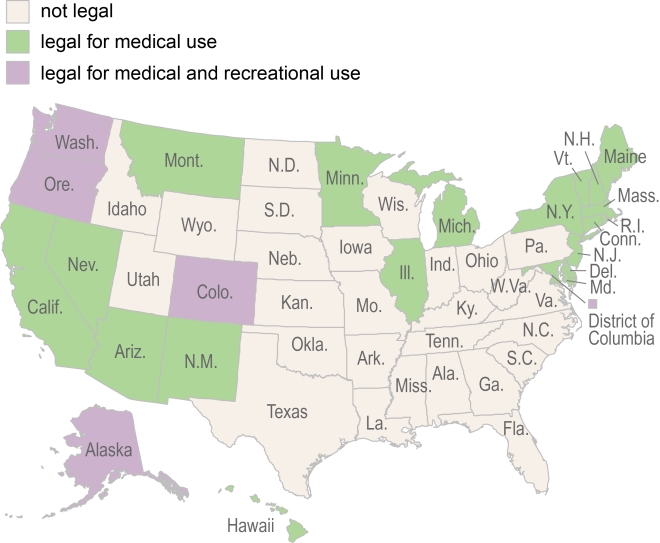
U.S. states started recognizing marijuana for it’s medicinal purposes, and a few states have now legalized cannabis recreationally. So why are these states legalizing it? What do they know that the rest of the great US of A doesn’t? Or, better yet, why are they willing to take the “risks” associated with legalizing weed?

marijuana legal status in us_v2Since legalizing marijuana, Colorado has been faced with a huge problem…just what will they do with all that extra tax money? Last year legal marijuana was a $700 million dollar industry for dear Colorado. And Washington’s legal marijuana market is also bringing in more tax revenue than the state predicted.
While new roads and better education is great, let’s get to the good stuff…health perks.
Are you ready? Here are just some of the proven health benefits of marijuana
Slows Down and Stops Cancer Cells from Spreading– A study published in the Molecular Cancer Therapeutics journal shows Cannabidiol has the ability to stop cancer by turning off a gene called Id-1. The American Association for Cancer Research has also found that marijuana slows down tumour growth in the brain, breasts, and lungs, considerably. It should also be noted that according to the data presented at an annual meeting of the American Academy for Cancer Research, people who regularly inhale cannabis smoke do not possess an increased risk of lung cancer compared to those who either consume it occasionally or not at all.  And guys, the government bloody knows this. You can read more about why they try to keep it a secret here
Decreases Hepatitis C Side Effects and Aids in Treatment– Hepatitis C causes unpleasant side effects that include fatigue, nausea, muscle pains, loss of appetite, and not surprisingly, depression.  A 2006 study in the European Journal of Gastroenterology and Hepatology discovered that 86% of patients using marijuana successfully finished their therapies, while only 29% of the non-smokers completed theirs. There is no surprise that because marijuana helps with the side effects, it also helps with the actual treatment of the disease. 54% of the Hepatitis C patients


 who smoked marijuana lowered their viral levels while only 8% of the non-smokers lowered theirs.
Prevents Alzheimer’s– A 2006 study led by Kim Janda of the Scripps Research Institute, discovered that THC, the beautifully active ingredient in weed, could halt or slow the progression of Alzheimer’s disease. THC slows the formation of amyloid plaques which are what lead to Alzheimer’s.
Treats Glaucoma– Are you seeing the benefits yet? Pun intended. Glaucoma is the eye disease that increases pressure on the eyeball, which damages the optic nerve and causes loss of vision. The National Eye Institute’s studies showed that marijuana, when smoked, lowered the intra-ocular pressure in patients with glaucoma.
May Protect the Brain After a Stroke– Though further research is needed for humans, research performed on mice, rats and monkeys by scientists at Nottingham University, showed TCH may help protect the brain by reducing the size of the affected area.
Helps People Suffering from PTSD (post-traumatic stress disorder) – PTSD is the number one reason veterans in New Mexico have obtained licenses for medical marijuana.  Cannabinoids help control fear and anxiety in the brain. One war veteran states, “I’m now 80 and I’m still a Holocaust child, but I’m finally able to better cope.”
Cures Chron’s Disease– Crohn’s disease is an inflammatory bowel disorder that causes pain, vomiting, diarrhoea, weight loss, and more. A recent study in Israel showed that smoking marijuana reduced symptoms in 10 out of 11 patients; 5 of those 10 patients were completely free of chrone’s disease after cannabis treatment.
May Help the Brain after Concussion and Trauma– The Cerebral Cortex journal showed possibilities that marijuana can help heal the brain after a concussion, or other traumatic injury. The study performed experiments on mice, and revealed that marijuana lessened the bruising of the brain, and helped with healing mechanisms after a traumatic injury. It is no wonder that Harvard professor, Lester Grinspoon recently wrote an open letter to NFL Commissioner Roger Goodall. In his letter he writes that the NFL should stop testing players for marijuana and should instead fund for research on marijuana’s ability to protect the brain.
Relieves Arthritis- It has been said that marijuana has been known to help with pain and aid in sleep, so it’s no surprise that studies have shown that the miracle plant helps relieve arthritis, a disease that is painful, so painful that it keeps sufferers awake at night. Though research is limited, there was research done in the Rheumatology departments at several hospitals around the country. The departments gave their patients Sativex, a cannabinoid-based pain-relieving medicine. After two weeks, patients who took Sativex had significant reduction in pain and gained improved sleep quality, compared to those who were given a placebo.
Controls Epileptic Seizures-A 2003 study performed by Robert J. DeLorenzo M.D., PhD, at the VCU Neurology Department found that TCH controls seizures by binding the brain cells responsible for controlling excitability and regulating relaxation.
Eases the Pain of MS- Canadians do it again. A study published in the Canadian Medical Association suggests that marijuana may ease painful symptoms of MS. Though a very small study, 30 MS patients who did not respond to other medications reported that they had less pain after smoking marijuana.
Helps Decrease Anxiety- Though dosage is very important when it comes to using weed to treat anxiety, researchers at Harvard University found that marijuana may actually reduce anxiety and improve the smoker’s mood. And most stoners can definitely agree with this.
Soothes Tremors Associated with Parkinson’s Disease- This benefit is one of the many reasons the legalization of medical marijuana exists in Israel. According to research performed in Israel, smoking marijuana has been shown to dramatically reduce pains and tremors in patients with Parkinson’s disease.
Boosts Creativity– Though this benefit isn’t exactly a health benefit, it’s my personal favourite. Any time I have a mental block or just simply can’t shut my brain down to relax, cannabis has proven to be a friend in need. And a damn good one. There has been little research done on how weed affects creativity, but you can read about one study here. And I for one can definitely attest.
aa2
And Now, Some Benefits of Hemp…
Hemp is the same plant as marijuana; its scientific name is “cannabis sativa.” Hemp was used to make paper, rope, textile and canvas for thousands of years until it was wrongfully banned. It is believed that hemp was banned because it was a competitive threat to the wood products industry.
Hemp is Awesome for the Environment- According to the U.S. Dept. of Agriculture, one acre of hemp can produce 4 times more paper than one acre of trees. And there is not a tree or other plant species that is capable of producing more paper than hemp. What does this mean? Making paper products from hemp can eliminate the need to chop down billions of trees, which means more clean oxygen and more preservation for wildlife habitats. There are also fewer caustic and toxic chemicals when making paper from hemp, than from trees.


Hemp Can be Substituted for Cotton- Hemp fiber is 10 times stronger than cotton and can be used to make clothing. Cotton only grows in warm climates and requires enormous amounts of water. Hemp requires little water and can grow just about anywhere. The plant also decreases air pollution because it is naturally resistant to pests and does not need pesticides to grow; clothing made from hemp does not contain any residual chemicals.
Hemp Can be Used for Fuel- Hemp is a very leafy plant and contributes a high level of oxygen to the atmosphere during its growth; between 20% and 40%. This makes up for the loss of oxygen when it is burnt as fuel, which in turn, reduces the unwanted effects of global warming, acid rain and the depletion in the ozone layer.
Hemp Seeds are Incredibly Good for You- 
  • Excellent source of essential fatty acids including Omega 3, 6 and GLA in the perfect balance
  • More digestible protein than meat, whole eggs, cheese, human milk, cows milk or any other high protein food
  • Rich in Vitamin E
  • Can be eaten by those unable to tolerate nuts, gluten, lactose or sugar; there are no known allergies to hemp foods
“Make the most of the hemp seed, sow it everywhere.”-George Washington

legalize-hemp
There is so much research claiming that marijuana is actually an amazing plant, so why are people so resistant?
Change is something that the human race has an incredibly hard time embracing. I think we can all relate to that, right? In fact, Andrea Simon Ph.D., Cultural Anthropologist tells us that early lessons in life keep people from seeing things in fresh ways. Our brain hates change because it must work very hard to experiment with unfamiliar ideas. She tells us “to ignite change, you need to do it yourself first-new ideas come from trying new solutions.”
If you have resistance to believing the benefits of marijuana, maybe you should try it out for yourself.

0ec4120


Source:http://educateinspirechange.org/health/research-reveals-the-amazing-benefits-of-marijuana-and-hemp-they-may-shock-you/

Monday, 16 January 2017

Marijuana-like Compounds May Aid Array Of Debilitating Conditions

by
 Image result for Marijuana Compounds


No longer a pipe dream, new animal research now indicates that marijuana-like compounds can aid a bevy of debilitating conditions, ranging from brain disorders such as amyotrophic lateral sclerosis (ALS) and Parkinson's disease, to pain and obesity.


In past studies, researchers determined that the main active chemicals in the drug marijuana produce a variety of effects by connecting to specific sites on nerve cells, called cannabinoid receptors. Researchers also discovered that these receptors normally bind to natural internal chemicals, dubbed cannabinoids.

“Understanding how marijuana and the brain's own natural cannabinoid system works is helping researchers design new medicines,” says cannabinoid expert Daniele Piomelli, PhD, of the University of California in Irvine. “It's believed that the controlled therapies that come out of this research might provide select benefits to patients while avoiding some of the unwanted effects seen with the drug.”

Research from California Pacific Medical Center in San Francisco points to the promise of marijuana-like treatments for those with the fatal brain disorder ALS, also known as Lou Gehrig's disease.

“Our research indicates that select marijuana compounds, including THC, significantly slow the disease process and extend the life of mice with ALS,” says study author Mary Abood, PhD.

The study extends earlier work from Abood's group that found that THC also can alleviate some ALS symptoms, like muscle spasms, in patients.

ALS wreaks its havoc by harming nerve cells that control muscles. As a consequence of the damage, an estimated 5,000 Americans afflicted annually experience progressive muscle weakness that can hinder movement, speech, even swallowing and breathing. New treatments for ALS are desperately needed.

“The only FDA approved drug for ALS, riluzole, extends life on average by about two months,” says Abood. “Evidence from our study suggests that a marijuana-based therapy could create a much greater effect, perhaps extending life by three years or more.”

In the study, ALS mouse models were given either the marijuana compound THC, the marijuana compound cannabidiol, cannabidiol plus THC, or a placebo daily following the onset of disease signs. The researchers measured disease progression by testing how long the mice could stand on a slowly rotating rod. The more severe their nerve cell degeneration, the less time the mice can balance on the rod. In addition, two conditions of ALS, the loss of movement ability and survival time, were analyzed using a mathematical model.

“We found that treatment with THC delayed disease progression by seven days and extended survival by six days in the mouse model,” says Abood. “This corresponds to three years in human terms.”

Results also indicate that the combination of THC and cannabidiol further delays disease progression. Treatment with cannabidiol alone, however, had no effect.

Another part of the study determined that the marijuana compounds create their benefits by reducing two molecular processes, known as oxidative stress and glutamate excitotoxicity. These processes have been implicated in ALS and are thought to harm nerve cells.

As a next step, the researchers will further decipher the mechanisms of action of THC and cannabidiol.

Another animal study also indicates that a marijuana-like compound can protect brain cells from the damage produced by the disorder Parkinson's disease.

“For the first time, our research shows the neuroprotective value of marijuana-like compounds in a well-established animal model of Parkinson's disease,” says study author Andrea Giuffrida, PhD, of the University of Texas Health Science Center in San Antonio.

Parkinson's afflicts some 1 million Americans. Symptoms include slowness of movement, muscle stiffness, and shaky tremors, which can harm a person's ability to walk, talk, write, and eat. This havoc results from the death or injury of brain cells that produce the chemical dopamine.

“There are therapies that can help replenish depleted levels of dopamine and provide symptomatic relief, but none can reverse, prevent, or delay the progression of Parkinson's disease,” says Giuffrida. “Our research shows that marijuana-like compounds may be able to answer this need.” 

In the study, researchers examined whether a marijuana-like compound designed to activate cannabinoid receptors, WIN 55212-2, could protect brain cells from degenerating in a Parkinson's mouse model, known as MPTP-treated mouse. These animals are given an injection of the toxin MPTP, which kills dopamine brain cells and induces symptoms seen in Parkinson's disease. The mice received a single injection of WIN 55212-2 30 minutes before the MPTP injection.

“We found that the brains of mice treated with the marijuana-like compound were almost indistinguishable from the brains of healthy mice,” says Giuffrida. 

As a next step, the researchers are testing whether the marijuana-like compounds have neuroprotective value when brain cell damage is already present and whether they can prevent the progression of brain cell loss. “Learning more about the mechanisms by which marijuana-like compounds may slow down or prevent neurodegeneration in Parkinson's disease may translate into new pharmacological treatments that could fight this disorder in its earliest stages,” adds Giuffrida.

Another new animal study finds that drugs often prescribed for mild pain, like the pain from a tooth extraction, create greater pain relief when combined with a marijuana-like compound. If confirmed in humans, the combination strategy could be a boon to those with persistent pain conditions.

Persistent pain is notoriously difficult to treat. An estimated 50 million Americans endure some type of persistent pain that lasts for months, even years, including back pain, headaches, arthritis pain, and cancer pain.


“We found that the combination of a marijuana-like compound with either the mild pain medication ibuprofen or rofecoxib provides more pain relief than each of them given alone,” says study author Pierre Beaulieu, MD, PhD, of the University of Montreal in Canada .

The marijuana-like compound that researchers tested in the study is called anandamide, a natural internal chemical that activates the same system as marijuana. Nonsteroidal anti-inflammatory drugs such as ibuprofen and rofecoxib inhibit a specific enzyme that prevents the degradation of anandamide. This led researchers to suspect that supplements of anandamide could create even greater pain relief effects.

In the study, researchers injected the drugs into the back paw of rats. Then 15 minutes later, researchers injected the compound formalin into the same paw, which creates a persistent inflammatory pain condition locally.

“We found that compared to a separate administration of drugs, anandamide combined with either ibuprofen or rofecoxib doubled the animals' pain relief,” says Beaulieu. “Also since the compounds were injected locally, into the paw, we believe that the treatment would avoid some of the deleterious psychoactive effects seen with marijuana.”

Marijuana and marijuana-like compounds can act on receptors in the brain and the periphery, but only the brain ones contribute to the psychoactive effects.

As a next step, the researchers are testing the treatment strategy in animals that model a particularly hard-to-treat, persistent pain condition that can result from nerve injury, termed neuropathic pain.

Another new animal study supports the development of treatments that target the cannabinoid system for those with obesity. “We found that a compound that blocks activity in the cannabinoid system can significantly reduce food intake in animals by triggering activity in another system that is known to regulate appetite and body weight,” says study author Michael Cowley, PhD, of Oregon Health and Science University.

Obesity has risen at an epidemic rate during the past 20 years, according to the Centers for Disease Control and Prevention. More than 60 percent of adult Americans are overweight or obese. These people face an increased risk for a range of physical ailments, including high blood pressure, diabetes, and stroke.

“For many years anecdotal reports have described how marijuana use can increase appetite,” says Cowley. “Some users describe these cravings as the munchies.”

This and other work has prompted the development of drugs that combat appetite by blocking the cannabinoid receptors, which are activated by marijuana. “Some of these drugs are in late stage clinical trials,” says Cowley. “How they are able to control eating, however, has been a mystery.”

To shed some light on how they might work, Cowley and his colleagues gave mice a cannabinoid receptor blocker, termed AM251. “We found that the treated animals significantly reduced their food intake, as has been known for many years,” says Cowley. “We also found evidence that the activity of brain cells involved in the melanocortin system, which is known to control food intake and energy balance, increased.”

Several molecular measures signaled that there was increased activity in melanocortin brain cells. Included was the discovery that in treated animals there was a fourfold increase in the number of melanocortin brain cells that contained c-fos, a marker of cellular activation.

“These data show that cannabinoid receptor blockers can regulate the melanocortin pathways in animals and support the further development of cannabinoid blockers to help combat obesity in humans,” says Cowley.

Top Ad 728x90