Top Ad 728x90

Showing posts with label Depression. Show all posts

Sunday, 19 March 2017

DOES MARIJUANA TREAT ANXIETY AND DEPRESSION? SHORT-TERM RELIEF VS. LONG-TERM EFFECTS, NEW RESEARCH

by
 Image result for Depression in girls

Marijuana is reputed for its ability to relieve pain and alleviate moods, so it would seem the ideal treatment for those suffering from depression or anxiety. However, new research suggests this may not be the case, after finding that in the long-term, heavy chronic marijuana use tends to worsen the symptoms of depression and anxiety, not reverse them.


The study found that individuals with subclinical depression who used marijuana to self-treat their depressive symptoms reported feeling more depressed than anxious. On the other hand, self-reported anxiety sufferers who used marijuana to treat their symptoms reported that they felt more anxious than they did depressed.

“If they [respondents] were using cannabis for self-medication, it wasn’t doing what they thought it was doing,” explained co-author Jacob Braunwalder, in a recent statement.

marijuana 
Marijuana does not seem to be a one-size-fits-all treatment for depression and anxiety.Photo CourtesyThe researchers note that the main caveat to their study is that the responses are self-reported and based off their own personal self-medication experiences. Still, the researchers urge that these results suggests it’s time to dedicate more research into how marijuana affects the brains of those with mental health conditions such as depression and anxiety.

“There is a common perception that cannabis relieves anxiety,” said study co-author Jeremy Andrzejewski in a recent statement, adding that the results of his research suggest the exact opposite.
At the moment, the team hypothesizes that marijuana may treat depression and anxiety in the beginning, but at some point begins to stop work and perhaps even worsen the condition symptoms. Much more research will be necessary in order to completely understand the effect of marijuana on mental health conditions.


This is not the first time researchers have suggested that marijuana exacerbated depression and anxiety treatments, and it may be that marijuana affects different patients differently. A 2015 animal study found that marijuana did help to reverse the effects to too much stress, the main cause of depression, in the brains of mice. However, the results were not strong enough to suggest the same could be true in humans. What’s more, depression and anxiety treatments are tailored to an individual’s needs and personal biology, so it would make sense that marijuana was not a “one-size-fits-all” fix to these complex medical conditions.

Source: Troup LJ, Andrzejewski JA, Braunwalder JT, Torrence RD. The relationship between cannabis use and measures of anxiety and depression in a sample of college campus cannabis users and non-users post state legalization in Colorado. Peer J. 2016

Viral Articles: 

Wednesday, 1 March 2017

New Mom Takes Her Own Life After Silent Battle With Postpartum Depression: Why All Of Us Must Share Her Friend’s Plea

by
New Mom Takes Her Own Life After Silent Battle With Post-Partum Depression: Why All Of Us Must Share Her Friend's Plea
Written by Julie Anne Waterfield
Allison was a beautiful ray of sunshine in my life.  The life of an Army wife can get lonely at times – moving around so much, searching for new friends, and trying to make a strange house and new town feel like home.  A mil-spouse herself, Allison knew the struggle, and reached out to my husband the very first weekend we moved a few houses down from her in Montgomery, Alabama.  She invited us on a blind friend date with her and her husband, Justin.  It wasn’t long into our first dinner together that I knew we hit the friend and neighbor jackpot.  It was easy to be drawn to Allison.  She was incredibly witty and had an amazing ability to make everyone around her feel welcome, included, and loved.  I knew we would be lifelong friends.


With both of us expecting our first child, Allison due a few months before me, we had a lot of similar experiences that year in Montgomery.  We shared pregnancy together, eating cupcakes regularly, waddling around the neighborhood, and alternating as the designated driver so our husbands could enjoy drinking for two on the weekends.  Allison’s career as an early childhood educator, coupled with adoration for her niece and nephews, portrayed her love and experience with little ones.  I trusted her baby sense, and copied everything she did.  I chose the same OB group, the same stroller and car seat, even the same nursing tanks and nipple shields.  I wanted to be just like her.  She was adorable, healthy, smart, funny, loyal, supportive, and oh so sweet.  Every time she greeted me with my giant belly, she said, “You look beautiful!”  Of course I didn’t think so when I looked in the mirror, but she made me feel so good.  Allison was a great friend.  She handled pregnancy and motherhood beautifully…on the outside.

On the inside, less than 200 feet away from me every day, Allison was silently struggling with Postpartum Depression.  I had NO idea.  I inquired about her postpartum hormones after baby Ainslee was born.  I bluntly asked her, “Do you feel crazy? Do you cry a lot?”  I wanted to know for myself and prepare for what I would soon be experiencing with the birth of our baby.  She responded that she cries some, but mostly happy tears about Ainslee gaining weight and the appearance of little chunky baby rolls, about how precious she is to her, and what a good father Justin is.  Why didn’t I dig further?  I regret every day that I accepted her answer.


My beautiful would-be life-long friend lost her hidden battle with Postpartum depression on June 28th, 2016.  She left behind a loving husband, a precious 4.5 month-old baby girl, and countless family and friends who adored her.  I miss her every day, and I’m not even her family.  The depth of their pain…I cannot fathom.  Her family’s hope, as well as mine, is that PPD is de-stigmatized, and that other struggling mothers may hear her story and seek help.  The truth can be so hard to speak, especially when you feel your truth is shameful.  There is nothing shameful about PPD.  The adjustment to a new way of life as a mother, added to the raging hormones, can be a brutal weight to bear.  It is a weight that never should be carried alone.

Not every new mother’s journey is happy and bright.  Sometimes it is dark, lonely, scary, miserable, and uncertain.  And the guilt!  The guilt that we self-impose and that society imposes on us is overwhelming.  If our journey as a mother isn’t daisies and butterflies, we feel alienated and ashamed.  There is a rainbow at the end of the PPD storm that is raging for these struggling mamas.  Help is out there in many forms if we just seek it: loving friends, supportive husbands, counselors, support groups, and medication. 

To all those mothers out there experiencing some of these same feelings: you are not alone, and you are not a bad mother!  PPD is lying to you.  It is twisting your memories, feelings, and beliefs and reshaping them into an overwhelming falsehood.  You will not be judged, only loved, as you seek help.  To those breast-feeding mothers taking Reglan (metoclopramide) to increase milk supply: stop and do research. Reglan has detrimental side effects such as new or worsening depression, suicidal ideation and suicide.  Supplement with formula if needed.  Your baby will be just as perfect and healthy with or without the breast milk.  Having more breast milk is not worth sacrificing your mental health or possibly your life.

Please share Allison’s message with everyone you know, and reach out to those new mamas. Love them through their struggles. Pray for them.  Open up about your own tough experiences as a new mother to make them feel more comfortable and less alienated.  Ask them tough questions over and over again.  I wish I had.

Resources and information for PPD:

New Study Reveals Marijuana does not Cause Anxiety and Depression as Previously Speculated

by

We have said in the past, and still stand by it, that our goal is to promote medical use of marijuana. We are not just an advocate of the plant just for smoking sake. We want people to benefit from it.


But across the world, there are many negative stereotypes and false mythologies about the plant. Especially in some countries in the global south; it is believed the mere smoking of marijuana irrespective of the quantity and the strength, can cause mental illness, the worst of it being madness.
However, over the years, as proponents of the plant gain momentum on its medical benefits, many researchers are using their own resources to conduct studies on the plant. Although research on the plant is still low, the little studies conducted are showing that some of the negative stereotypes against the plant aren’t true.

Today, we are glad to report to you that a group of scientists have announced in a new study that there is absolutely no link between marijuana use and mental health problems.

Like we said earlier, there has long been debate over the plant’s potential link to mental health problems. The Telegraph reports that a major study in 2015 found that one in four new cases of psychotic conditions, such as schizophrenia, could be the direct result of smoking extra-strong varieties of marijuana, known as skunk.
 
But in this new study, the researchers from Columbia University, United States, said marijuana does not increase the risk of developing anxiety or depression. The study found something else instead.


In the study, the researchers used 35,000 American adults. The researchers then looked at the prevalence of marijuana use among the participants, and then assessed their rates of mental health problems three years later


The results showed that marijuana users are more likely to become dependent on other substances like alcohol or cigarettes. The study also showed that those who used marijuana had an increased risk of developing alcohol and drug use disorders, including nicotine dependence. Users of marijuana were also found to be three times more likely to have alcohol problems, and twice as likely to smoke cigarettes.


An associate professor of epidemiology at Columbia Mailman School of Public Health, Dr Renee Goodwin said:

Our results suggest that cannabis use appears to be associated with an increased vulnerability to developing an alcohol use disorder, even among those without any history of this. Marijuana use also appears to increase the likelihood that an existing alcohol use disorder will continue over time.


The study has been accepted and published in the journal JAMA Psychiatry. The study has excited marijuana advocates. Gradually, the marijuana industry is becoming a big business in the United States, where multiple states have made the plant legal. People are using it to heal themselves of many life-threatening diseases, such as cancer.

People advocating for the legalization of marijuana across the United States say this new study adds to previous studies discrediting the connection between marijuana and common mental-health disorders.


A drug policy analyst, Christopher Ingraham wrote on the Washington Post that this new study is important because much of the federal government’s current literature on marijuana includes claims about links between marijuana and depression.

He cited two examples to prove his claim. First, he said the Drug Enforcement Administration (DEA) linked marijuana use to mental disorders in its official fact sheet on marijuana.

In another study published in 2014, titled The Dangers and Consequences of Marijuana Abuse, the DEA used the word depression approximately 14 times. The DEA also claimed that marijuana is linked to depression among teens, adults, and even dogs.

It is believed many of the DEA claims on marijuana are inaccurate. Officials out of serving the government have built a very dark image about the plant. Therefore, it confuses the public on the true picture of the plant.
 

Monday, 20 February 2017

DOES MARIJUANA TREAT ANXIETY AND DEPRESSION? SHORT-TERM RELIEF VS. LONG-TERM EFFECTS, NEW RESEARCH

by
Marijuana is reputed for its ability to relieve pain and alleviate moods, so it would seem the ideal treatment for those suffering from depression or anxiety. However, new research suggests this may not be the case, after finding that in the long-term, heavy chronic marijuana use tends to worsen the symptoms of depression and anxiety, not reverse them.


The study found that individuals with subclinical depression who used marijuana to self-treat their depressive symptoms reported feeling more depressed than anxious. On the other hand, self-reported anxiety sufferers who used marijuana to treat their symptoms reported that they felt more anxious than they did depressed.

“If they [respondents] were using cannabis for self-medication, it wasn’t doing what they thought it was doing,” explained co-author Jacob Braunwalder, in a recent statement.
marijuana
Marijuana does not seem to be a one-size-fits-all treatment for depression and anxiety.Photo Courtesy

The researchers note that the main caveat to their study is that the responses are self-reported and based off their own personal self-medication experiences. Still, the researchers urge that these results suggests it’s time to dedicate more research into how marijuana affects the brains of those with mental health conditions such as depression and anxiety.

“There is a common perception that cannabis relieves anxiety,” said study co-author Jeremy Andrzejewski in a recent statement, adding that the results of his research suggest the exact opposite.
At the moment, the team hypothesizes that marijuana may treat depression and anxiety in the beginning, but at some point begins to stop work and perhaps even worsen the condition symptoms. Much more research will be necessary in order to completely understand the effect of marijuana on mental health conditions.


This is not the first time researchers have suggested that marijuana exacerbated depression and anxiety treatments, and it may be that marijuana affects different patients differently. A 2015 animal study found that marijuana did help to reverse the effects to too much stress, the main cause of depression, in the brains of mice. However, the results were not strong enough to suggest the same could be true in humans. What’s more, depression and anxiety treatments are tailored to an individual’s needs and personal biology, so it would make sense that marijuana was not a “one-size-fits-all” fix to these complex medical conditions.

Source: Troup LJ, Andrzejewski JA, Braunwalder JT, Torrence RD. The relationship between cannabis use and measures of anxiety and depression in a sample of college campus cannabis users and non-users post state legalization in Colorado. Peer J. 2016

Wednesday, 15 February 2017

When you’re in constant pain, depression usually isn’t far behind

by


Gloria Pope, director of advocacy and public policy for the Depression and Bipolar Support Alliance, suffers excruciating migraine headaches and says she can feel them fueling her depression.


“I go all week under stress, and when it’s the weekend, the headaches smack me,” says Pope. She says she loses the equivalence of two to three days of her free time each week — she doesn’t make plans because she’s afraid she’ll be hit with a massive headache. As summer and nice weather approach, she’s says it brings her down to be stuck inside, “sick as a dog.”

Chronic pain and depression are intimately connected — so much so that doctors often aren’t quite sure which condition causes the other. Depression occurs at least three times more frequently in people who deal with chronic pain than in those who don’t. Research indicates that if all patients with chronic pain were screened for depression, many cases of previously undiagnosed depression would be found.

The Depressing Side of Pain
According to researchers, there are a number of reasons why chronic pain and depression are so closely linked:
  • Chronic pain takes an emotional toll. When you’re in pain all the time, you’re not able to take care of your day-to-day responsibilities as easily and your relationships with family and friends may become strained. Not surprisingly, studies have found that the degree of pain a person experiences directly influences symptoms of depression — more physical pain simply takes a bigger toll on your mood.
  • The same regions of the brain regulate pain and depression. Researchers have found that the same areas of the brain are responsible for processing both pain and feelings of depression. Another study showed that the part of the brain that works to diminish pain was sluggish in the depressed subjects. The brain uses many of the same chemicals responsible for regulating mood, including serotonin and norepinephrine, to transmit pain signals. Chronic pain and chronic depression both have similar effects on the nervous system as well, often intensifying perceptions of pain. It’s no coincidence that many medications prescribed as antidepressants are effective in treating pain, too.


Treating Pain and Depression Together
A combination of therapies is usually necessary to treat chronic pain that occurs in association with depression. The physical source of your pain must be treated as well as your feelings of depression.
Therapies your doctor might recommend to help you deal with pain and depression include:
  • Pain medication
  • Antidepressants
  • Massage
  • Meditation
  • Biofeedback
  • Hypnosis
  • Cognitive-behavioral therapy
  • Psychotherapy
A person experiencing chronic pain and depression may also benefit from treatment at a pain management center. Specialists at these centers are skilled at combining the therapies listed above to help break the cycle in which symptoms of pain and depression feed off each other.

Successful treatment of chronic pain and depression can be a lengthy process. You may need to try several different therapies before finding one that deals with your depression and helps alleviate your pain. Be patient and keep in mind that both conditions can be managed effectively.

Monday, 13 February 2017

Living With High-Functioning and Hidden Anxiety

by
Image result for Living With High-Functioning and Hidden Anxiety
High-functioning anxiety looks like…
Achievement. Busyness. Perfectionism.
When it sneaks out, it transforms into nervous habits. Nail biting. Foot tapping. Running my fingers through my hair.
If you look close enough, you can see it in unanswered text messages. Flakiness. Nervous laughter. The panic that flashes through my eyes when a plan changes. When anything changes.
High-functioning anxiety feels like…
A snake slithering up my back, clamping its jaws shut where my shoulders meet my neck. Punch-in-the-gut stomach aches, like my body is confusing answering an email with being attacked by a lion.
High-functioning anxiety sounds like…
You’re not good enough. You’re a bad friend. You’re not good at your job. You’re wasting time. You’re a waste of time. Your boyfriend doesn’t love you. You’re so needy.What are you doing with yourself? Why would you say that? What if they hate it? Why can’t you have your shit together? You’re going to get anxious and because you’re going to get anxious, you’re going to mess everything up. You’re a fraud. Just good at faking it. You’re letting everybody down. No one here likes you.
All the while, it appears perfectly calm.
It’s always looking for the next outlet, something to channel the never-ending energy. Writing. Running. List-making. Mindless tasks (whatever keeps you busy). Doing jumping jacks in the kitchen. Dancing in the living room, pretending it’s for fun, when really it’s a choreographed routine of desperation, trying to tire out the thoughts stuck in your head. 
It’s silent anxiety attacks, hidden by smiles.
It’s always being busy but also always avoiding, so important things don’t get done. It’s letting things pile up rather than admitting you’re overwhelmed or in need of help.
It’s that sharp pang of saying the wrong thing, the one that starts the cycles of thoughts. Because you said too much, and nobody cares, and it makes you never want to speak up again.
It’s going back and forth between everyone else has it together but you, and so many people have it tougher than you.
Get your act together.
Suck it up.
You’re not OK, you’re messing everything up.
You’re totally OK, stop being such a baby.
It’s waking up in the middle of the night sobbing because the worst-case-scenario that just went through your head at high speed seems so real, so vivid, that even when it’s proven to be untrue, it takes hours for your heart to slow down, to feel calm again.
Because how “OK” are you when a day without a plan is enough to make you crumble? When empty spaces make you spiral at the very anticipation of being alone with your thoughts? When you need to make a list to get through a Sunday: watch a show, clean your kitchen, exercise, answer five emails, read 10 pages, watch a show… ?
It’s feeling unqualified to write this piece because I’m getting by. It’s when you’re social enough to get invited to things, but so often find yourself standing in a room where it feels like no one knows you. It’s being good at conversation and bad at making close friends because you only show up when you feel “well” enough. Only text back when you feel ready. Because you’re afraid they’d hate you if they really knew you. That the energy would overwhelm them, and you’d lose them.
So you learn to rein it in. Channel it. Even though sometimes you do everything right (exercise, sleep, one TV show, five emails, 10 pages…) and you’re still left with racing thoughts, the panic. The not good enoughs.
When will it be enough?
Having anxiety means constantly managing motion that can be productive or self-destructive, depending on how much sleep you got. Depending on the day. Depending on the Earth’s alignment with Mars. Depending on…
It’s when “living with it” means learning how to sit with it. Practicing staying in bed a little longer. Challenging the mean, unrelenting voices that say you’re only worth what you produced that day.
It means learning how to say, “I need help.” Trying to take care of yourself without the guilt. It means every once in a while, confiding in a friend. It means sometimes showing up even when you’re scared.
It’s when answering a text impulsively and thoughtlessly is an act of bravery.
It’s fighting against your own need to constantly prove your right to exist in this world.
It’s learning how to validate your own feelings. That even though you don’t feel like you’re enough, and you’ll never be enough, it’s knowing you’re at least anxious enough to benefit from help. That admitting you need it doesn’t confirm voices’ lies. That taking a break doesn’t mean you’re a failure.
It’s finding your own humanity in the anxiety, in your weaknesses. It’s trying to let the energy inspire you, instead of bring you down. It’s forgiving yourself when it wins.
It’s a way to live, with this constant companion. Your bullying twin. Collapsible luggage you can bury away at a moment’s notice. Shove it under the bed. Pretend it’s not there until you can’t fit anymore. Until you can no longer ignore it. Until you have to face it.
A first good step is staring at it straight on and calling it by its name.
High anxiety can be a natural consequence of a busy lifestyle, but its existence is akin to the chicken and the egg. Which came first, the anxiety or the busyness? Am I always moving because I’m anxious or am I anxious because I’m always moving?
Either way, it’s not a noble way to suffer. It’s not a “better” way to be anxious. Just because you’re “functioning” doesn’t always mean you’re happy. And just because you’re functioning doesn’t mean you shouldn’t slow down, breathe and take one damn second to be happy the way things are.
In this very moment.
This quiet, short moment.
To remember the peace you found in that second of silence, until the electricity starts again, and you’re forced to move.

Friday, 3 February 2017

Research Reveals the Amazing Benefits of Marijuana and Hemp: They May Shock You

by
What if I told you its OK to change your mind based on new information?
The knowledge of marijuana’s benefits is on the rise, the high rise if you will. Pun intended.
More and more research is proving that marijuana isn’t the gateway drug that we are all made to believe it is. In fact, many of the negative things told to us about marijuana have proven to be false according to many recent studies. An increasing number of states in the U.S. are recognizing these new studies and changing history in the process.
U.S. states started recognizing marijuana for it’s medicinal purposes, and a few states have now legalized cannabis recreationally. So why are these states legalizing it? What do they know that the rest of the great US of A doesn’t? Or, better yet, why are they willing to take the “risks” associated with legalizing weed?

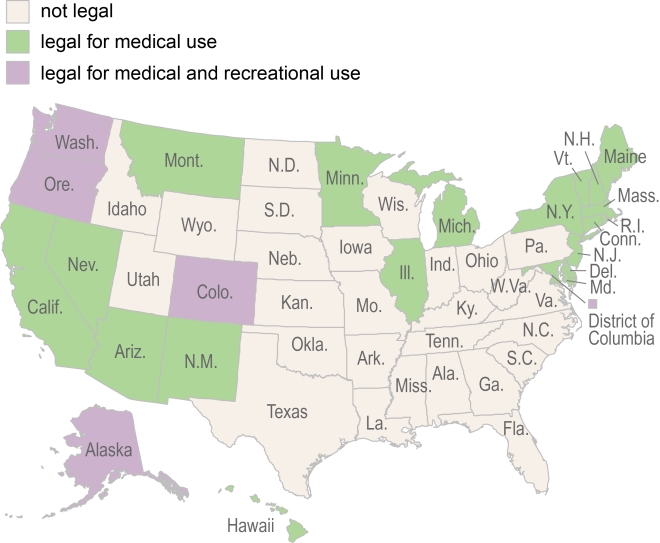
marijuana legal status in us_v2Since legalizing marijuana, Colorado has been faced with a huge problem…just what will they do with all that extra tax money? Last year legal marijuana was a $700 million dollar industry for dear Colorado. And Washington’s legal marijuana market is also bringing in more tax revenue than the state predicted.
While new roads and better education is great, let’s get to the good stuff…health perks.
Are you ready? Here are just some of the proven health benefits of marijuana
Slows Down and Stops Cancer Cells from Spreading– A study published in the Molecular Cancer Therapeutics journal shows Cannabidiol has the ability to stop cancer by turning off a gene called Id-1. The American Association for Cancer Research has also found that marijuana slows down tumour growth in the brain, breasts, and lungs, considerably. It should also be noted that according to the data presented at an annual meeting of the American Academy for Cancer Research, people who regularly inhale cannabis smoke do not possess an increased risk of lung cancer compared to those who either consume it occasionally or not at all.  And guys, the government bloody knows this. You can read more about why they try to keep it a secret here
Decreases Hepatitis C Side Effects and Aids in Treatment– Hepatitis C causes unpleasant side effects that include fatigue, nausea, muscle pains, loss of appetite, and not surprisingly, depression.  A 2006 study in the European Journal of Gastroenterology and Hepatology discovered that 86% of patients using marijuana successfully finished their therapies, while only 29% of the non-smokers completed theirs. There is no surprise that because marijuana helps with the side effects, it also helps with the actual treatment of the disease. 54% of the Hepatitis C patients


 who smoked marijuana lowered their viral levels while only 8% of the non-smokers lowered theirs.
Prevents Alzheimer’s– A 2006 study led by Kim Janda of the Scripps Research Institute, discovered that THC, the beautifully active ingredient in weed, could halt or slow the progression of Alzheimer’s disease. THC slows the formation of amyloid plaques which are what lead to Alzheimer’s.
Treats Glaucoma– Are you seeing the benefits yet? Pun intended. Glaucoma is the eye disease that increases pressure on the eyeball, which damages the optic nerve and causes loss of vision. The National Eye Institute’s studies showed that marijuana, when smoked, lowered the intra-ocular pressure in patients with glaucoma.
May Protect the Brain After a Stroke– Though further research is needed for humans, research performed on mice, rats and monkeys by scientists at Nottingham University, showed TCH may help protect the brain by reducing the size of the affected area.
Helps People Suffering from PTSD (post-traumatic stress disorder) – PTSD is the number one reason veterans in New Mexico have obtained licenses for medical marijuana.  Cannabinoids help control fear and anxiety in the brain. One war veteran states, “I’m now 80 and I’m still a Holocaust child, but I’m finally able to better cope.”
Cures Chron’s Disease– Crohn’s disease is an inflammatory bowel disorder that causes pain, vomiting, diarrhoea, weight loss, and more. A recent study in Israel showed that smoking marijuana reduced symptoms in 10 out of 11 patients; 5 of those 10 patients were completely free of chrone’s disease after cannabis treatment.
May Help the Brain after Concussion and Trauma– The Cerebral Cortex journal showed possibilities that marijuana can help heal the brain after a concussion, or other traumatic injury. The study performed experiments on mice, and revealed that marijuana lessened the bruising of the brain, and helped with healing mechanisms after a traumatic injury. It is no wonder that Harvard professor, Lester Grinspoon recently wrote an open letter to NFL Commissioner Roger Goodall. In his letter he writes that the NFL should stop testing players for marijuana and should instead fund for research on marijuana’s ability to protect the brain.
Relieves Arthritis- It has been said that marijuana has been known to help with pain and aid in sleep, so it’s no surprise that studies have shown that the miracle plant helps relieve arthritis, a disease that is painful, so painful that it keeps sufferers awake at night. Though research is limited, there was research done in the Rheumatology departments at several hospitals around the country. The departments gave their patients Sativex, a cannabinoid-based pain-relieving medicine. After two weeks, patients who took Sativex had significant reduction in pain and gained improved sleep quality, compared to those who were given a placebo.
Controls Epileptic Seizures-A 2003 study performed by Robert J. DeLorenzo M.D., PhD, at the VCU Neurology Department found that TCH controls seizures by binding the brain cells responsible for controlling excitability and regulating relaxation.
Eases the Pain of MS- Canadians do it again. A study published in the Canadian Medical Association suggests that marijuana may ease painful symptoms of MS. Though a very small study, 30 MS patients who did not respond to other medications reported that they had less pain after smoking marijuana.
Helps Decrease Anxiety- Though dosage is very important when it comes to using weed to treat anxiety, researchers at Harvard University found that marijuana may actually reduce anxiety and improve the smoker’s mood. And most stoners can definitely agree with this.
Soothes Tremors Associated with Parkinson’s Disease- This benefit is one of the many reasons the legalization of medical marijuana exists in Israel. According to research performed in Israel, smoking marijuana has been shown to dramatically reduce pains and tremors in patients with Parkinson’s disease.
Boosts Creativity– Though this benefit isn’t exactly a health benefit, it’s my personal favourite. Any time I have a mental block or just simply can’t shut my brain down to relax, cannabis has proven to be a friend in need. And a damn good one. There has been little research done on how weed affects creativity, but you can read about one study here. And I for one can definitely attest.
aa2
And Now, Some Benefits of Hemp…
Hemp is the same plant as marijuana; its scientific name is “cannabis sativa.” Hemp was used to make paper, rope, textile and canvas for thousands of years until it was wrongfully banned. It is believed that hemp was banned because it was a competitive threat to the wood products industry.
Hemp is Awesome for the Environment- According to the U.S. Dept. of Agriculture, one acre of hemp can produce 4 times more paper than one acre of trees. And there is not a tree or other plant species that is capable of producing more paper than hemp. What does this mean? Making paper products from hemp can eliminate the need to chop down billions of trees, which means more clean oxygen and more preservation for wildlife habitats. There are also fewer caustic and toxic chemicals when making paper from hemp, than from trees.


Hemp Can be Substituted for Cotton- Hemp fiber is 10 times stronger than cotton and can be used to make clothing. Cotton only grows in warm climates and requires enormous amounts of water. Hemp requires little water and can grow just about anywhere. The plant also decreases air pollution because it is naturally resistant to pests and does not need pesticides to grow; clothing made from hemp does not contain any residual chemicals.
Hemp Can be Used for Fuel- Hemp is a very leafy plant and contributes a high level of oxygen to the atmosphere during its growth; between 20% and 40%. This makes up for the loss of oxygen when it is burnt as fuel, which in turn, reduces the unwanted effects of global warming, acid rain and the depletion in the ozone layer.
Hemp Seeds are Incredibly Good for You- 
  • Excellent source of essential fatty acids including Omega 3, 6 and GLA in the perfect balance
  • More digestible protein than meat, whole eggs, cheese, human milk, cows milk or any other high protein food
  • Rich in Vitamin E
  • Can be eaten by those unable to tolerate nuts, gluten, lactose or sugar; there are no known allergies to hemp foods
“Make the most of the hemp seed, sow it everywhere.”-George Washington

legalize-hemp
There is so much research claiming that marijuana is actually an amazing plant, so why are people so resistant?
Change is something that the human race has an incredibly hard time embracing. I think we can all relate to that, right? In fact, Andrea Simon Ph.D., Cultural Anthropologist tells us that early lessons in life keep people from seeing things in fresh ways. Our brain hates change because it must work very hard to experiment with unfamiliar ideas. She tells us “to ignite change, you need to do it yourself first-new ideas come from trying new solutions.”
If you have resistance to believing the benefits of marijuana, maybe you should try it out for yourself.

0ec4120


Source:http://educateinspirechange.org/health/research-reveals-the-amazing-benefits-of-marijuana-and-hemp-they-may-shock-you/

Thursday, 12 January 2017

Finally I Cured My Depression with Cannabis

by
Image result for Finally I Cured My Depression.


You’ve no doubt seen a great deal of changes in my life over the last three years. Despite never being a risk taker, I quit my job and traveled the world. Despite being shy and anti-social, I met a few of my celebrity heroes and hung out with them in their actual homes. Despite never dating, I fell in love and got married. All of these were possible because after fifteen years of struggling, I finally curbed my depression. And I did it without ever using antidepressants.


You’ve asked me how I accomplished this, but until now, I’ve kept the secret to myself. The reason? I love you both very much. As a son, loving you is great. As a writer, it’s a problem. I’ve joked that the biggest thing holding me back from being a successful artist is that I love my parents. Any sincere artist/musician/writer should be willing to stand naked before the masses, honest and vulnerable. That would be a lot easier for me if you had done a shitty job.
But you didn’t. You did an amazing job, and because of that, the last thing I want to do is ruin the shining “golden boy” image you might have of me. I’ve tried to keep that image polished for you my whole life, and part of me thinks it’s pointless to sully it while you’re in your twilight years. But, I feel an increasing weight on my shoulders. I don’t want to disappoint you, but I’m saddened by the prospect of never allowing myself to be honest. Whether I’m judged for it or not, I have to tell the truth.
The truth is that I made one simple decision that profoundly impacted my life more than any other, and this one decision was the seed from which so many great things sprouted:
I decided to eat some magic mushrooms.
Please stay calm. Take a breath. Nothing bad happened. As far as I can tell, the only long-term consequence is that I now look at the world with greater empathy, understanding, self-awareness, acceptance, and unconditional love. You know, nothing major.
Before you pass judgment, I need to ask: have you ever tried magic mushrooms? Based on your extremely conservative worldview, I’m going to assume no. (If I’m wrong, please call me now, because I want to hear that story immediately!) If I’m correct, then I should explain a few things.
First, almost everything we’ve been taught by schools, the media, and yes, even our parents, is a lie. It turns out there is no Santa Claus; Christopher Columbus was a genocidal asshole; and psychedelics might be the best way to treat clinical depression. I forgave society for lying about Santa; I decided Columbus Day can go fuck itself; and I decided to try everything within my power to rid myself of depression, even if it included psychedelics.
Depression is embarrassing as hell to talk about, because I know have a lot to be thankful for. I was born a white male in the American suburbs with loving parents. That’s an amazing stroke of luck that I did absolutely nothing to earn. In a world filled with racism, sexism, violence, and hunger — a world where millions of people don’t even have access to drinking water — being upset about my petty first-world problems made me feel like a selfish, ungrateful asshole. But, as anyone struggling with depression knows, there’s very little logic that factors into the equation. However, I made the decision that I was going to get better, and I was going to do so without using antidepressants.
magic mushrooms cured my depression psychedelics treat depression psilocybin mental health anxiety magic mushrooms cure depression
I tried meditation, gratitude journals, exercise, and altruism — all great things — but depression would always creep back and cling to me like the sneaky, miserable little prick that it is. Then, one beautiful summer night while I was camping with friends, I had the opportunity to try psilocybin mushrooms.
Don’t look at me like that. Hear me out! Your baby boy cured his depression. Smile! If you still feel like I let you down, let me remind you:
I’m a square son of a bitch. I didn’t drink alcohol until I was 21. Until I tried shrooms (age 27), I had never tried any illegal drug, including weed. I’m a safe, overly responsible nerd who is so calcified in his own awkwardness that he’s immune to the chisel of peer-pressure. Believe me, this had nothing to do with peer pressure. This was about healing my brain, and maybe even my soul.
I’ll be honest — I have no idea how you’ll react to this news. Maybe you’ll feel disappointed. Maybe you’ll judge me. Maybe you won’t give half a shit (I’m hoping for this one). But ultimately, I know all good parents want their children to be happy, and if there was even a small chance that eating magic mushrooms could cure my depression, you should support my decision to give it a shot.
So, camping that night, I gave a friend $10 for a palmful of mushrooms, and I decided to take control of my own life.
I ate the mushrooms, and I can describe the experience in one word:
magic mushrooms cured my depression psychedelics treat depression psilocybin mental health anxiety magic mushrooms cure depression
AWESOME.
They’re called magic for a reason. I don’t want you to take the following statement lightly: that night on the beach was the single most spiritual experience I’ve ever had. In one night I achieved what most people search for their entire lives: peace, love, and forgiveness. If you’ve never taken shrooms, it’s nothing like the bullshit you see in Hollywood. There are no fairies. No cartoon characters. The actual experience is far more sublime.
The first thing I noticed was a warmth that spread throughout my body. It felt like Mother Nature herself wove together a blanket using bliss, relaxation, and euphoria, then swaddled me up in it like a happy, newborn babe.
magic mushrooms cured my depression psychedelics treat depression psilocybin mental health anxiety magic mushrooms cure depression
Then came the urge to laugh. Nothing funny happened. I was just joyful. I laughed for no reason, other than the fact I was shocked by how good this felt. I looked around me and saw nothing but perfection. I never loved anything as much as I did that night, but I’d also never felt as loved as I did that night. Love was reflected back at me from everything — the trees, the sand, the ocean.
Above me, birds flew overhead and split the sky like ripples in a pond. Stars twinkled and changed colors, exploding like tiny fireworks.


I laughed some more, convinced that the universe was trying to communicate to me in a language I didn’t speak. It didn’t matter if it wasn’t using words; I got the message, and it was something I needed to hear my whole life. It was a message that was too simple and perfect to be translated into a flawed, clunky language. It was something I needed to feel.
I’d never been happier to be exactly where I was, fully immersed within the Now.
“If you’re happy with yourself now, you should never regret anything in the past, because everything in the past has led up to who you are now.”
I used to tell people that, but for once in my life, I finally felt it.
Read this: Psychedelics Can Treat Depression: Why We Must Legalize Psychedelics
I started thinking about my past. The good experiences. The bad. Especially the bad. But here’s the thing — they were no longer “bad.” In fact, they seemed to be the most necessary and important experiences I ever had. I finally recognized how each “negative” experience was absolutely crucial for me to become the person I am today, and I forgave everyone that I thought mistreated me. More importantly, I forgave myself. I literally felt lighter as the weight of blame and resentment melted off of me and dissipated into the ether.
Then I thought about both of you, back home in the Midwest, and I started to cry. Not because I was sad, but because never in my life did I feel more grateful for everything you’ve done for me. You kept me safe, well fed, clothed, and sheltered. You encouraged me to learn, and always kept me humble. Even though we weren’t the type of family that said, “I love you,” I wanted to call you then and say the words.
But I didn’t, because I was afraid. I was afraid that if you knew I was on drugs, you’d judge me. And I didn’t want to feel judged. Not from the two most important people in my life. That’s why I needed to write this letter. I want you to understand.
People who try psychedelics aren’t necessarily hippies, druggies, or burnouts. Many of us are just trying to find our own piece of happiness. For me, it worked.
magic mushrooms cured my depression psychedelics treat depression psilocybin mental health anxiety magic mushrooms cure depression
After that night, the physical side effects wore off, but the psychological benefits remained. I felt less alone. I felt healthier. I felt more connected to others. And to my amazement, I no longer felt depressed. To describe the experience succinctly:
Ingesting psilocybin mushrooms was akin to floating into heaven, kissing the face of God, then drifting back down to earth with the knowledge that I always have been and always will be loved.
Don’t worry, I’m not an addict (and they’re not addictive). I haven’t done them in over two years. I decided to tell the truth because if I’m not willing to be honest with you, I’ll never be honest with the public, and the public needs more clear-minded individuals to speak out about the benefits of psychedelics so they can finally drop all of that “hippie” baggage.
With marijuana becoming decriminalized in many states, hopefully psychedelics will follow the same path as cannabis. First comes scientific research. This will lead to the discovery of proven health benefits. Next, people need to be educated on safe, responsible use.
When this happens, we can finally evolve as a society and legalize psychedelics. Or rather, relegalize them (Fuck you, Nixon!). Who knows? In a few years, maybe sons and daughters will be able to talk to their parents about psychedelics as comfortably as they talk to them about prescription medication. In the future, maybe writing a 1,700-word diatribe to shield against their parents’ potential disappointment will be completely unnecessary.

Source:
https://healthfit335.wordpress.com/2016/05/09/finally-i-curbed-my-depression/

Thursday, 5 January 2017

Her mother doesn’t get why she’s depressed. So she explains the best way she knows how.

by
depressed

Sabrina Benaim eloquently describes what it’s like to be depressed.
Sabrina Benaim’s “Explaining My Depression to My Mother” is pretty powerful on its own:


But, in it, her mother exhibits some of the most common misconceptions about depression, and I’d like to point out three of them here.

Misconception #1: Depression is triggered by a single event or series of traumatic events.

Most people think depression is triggered by a traumatic event: a loved one dying, a job loss, a national tragedy, some THING. The truth is that depression sometimes just appears out of nowhere. So when you think that a friend or loved one is just in an extended bad mood, reconsider. They could be suffering from depression.

Misconception #2: People with depression are only sad.


Most people who have never experienced depression think depression is just an overwhelming sadness. In reality, depression is a complex set of feelings and physical changes in the body. People who suffer from depression are sad, yes, but they can also be anxious, worried, apathetic, and tense, among other things.

Misconception #3: You can snap out of it.


The thing with depression is that it’s a medical condition that affects your brain chemistry. It has to do with environmental or biological factors first and foremost. Sabrina’s mother seems to think that if her daughter would only go through the motions of being happy that then she would become happy. But that’s not the case. Depression is a biological illness that leaks into your state of being.


Think of it this way: If you had a cold, could you just “snap out of it”?
No? Exactly.


These are only three of the misconceptions about depression. If you know somebody suffering from depression, you should take a look at this video here to learn the best way to talk to them.

Top Ad 728x90